Norweco Singulair Green System Advantages You Should Understand
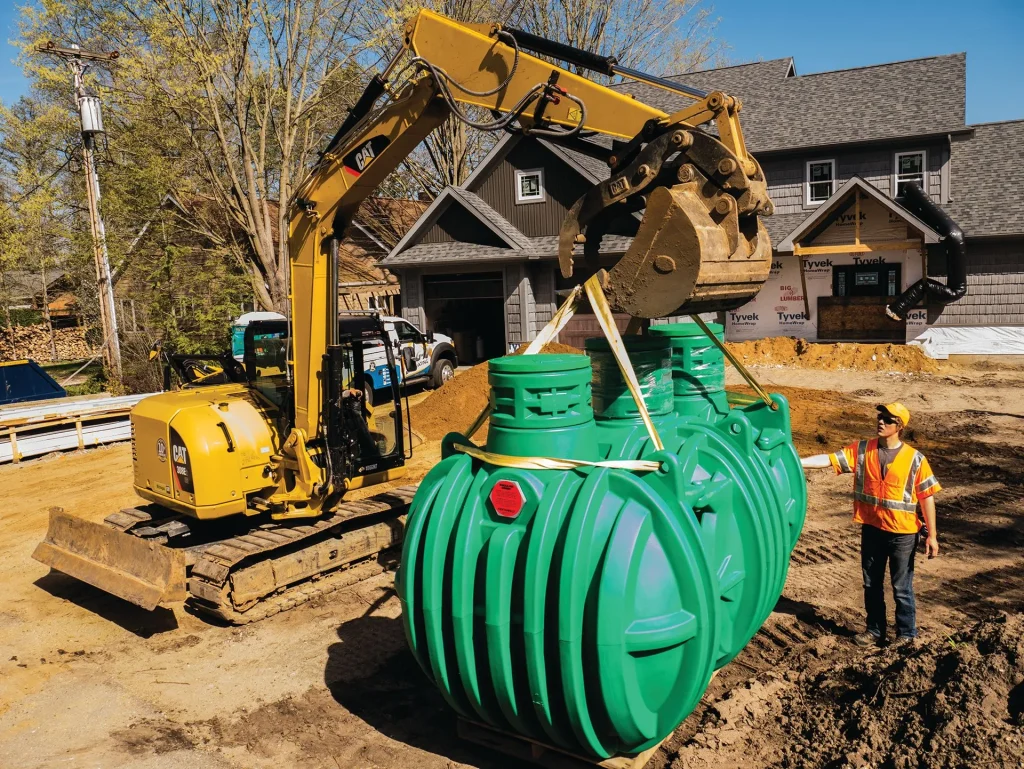
When people compare onsite wastewater systems, they often focus on the wrong thing first. They look at tank size, a brochure diagram, or the initial installation price, then assume the rest will sort itself out. In practice, the day-to-day performance of a treatment system matters far more than the sales sheet. That is especially true on properties where soil conditions are poor, lot sizes are tight, or local discharge standards leave little room for error.
The Norweco Singulair Green system comes up often in those conversations because it sits in a category that asks more of the equipment than a basic septic tank does. It is designed to treat wastewater to a higher standard through an aeration process, and for many sites that can make the difference between a workable project and a constant headache. If you are evaluating a norweco singulair green setup for a home, a light commercial property, or a replacement project, the real advantages show up in performance, flexibility, and long-term site management.
That does not mean it is the right answer in every case. Advanced treatment systems bring responsibilities. They need power. They need service. They reward owners who pay attention. But where a conventional system is likely to struggle, the strengths of a well-maintained Singulair Green installation become pretty clear.
Why advanced treatment changes the conversation
A conventional septic system mostly separates solids from liquid and then relies heavily on the drainfield and native soil to finish the job. That model can work very well where soils percolate correctly, setbacks are manageable, and household loading stays within design assumptions. The trouble starts when one or more of those conditions is missing.
On a small parcel, there may not be enough room to spread out a large absorption field. On a waterfront lot, regulators may require stronger treatment before effluent reaches shallow groundwater. On clay-heavy or otherwise challenging soils, the drainfield may be under stress from the beginning. In those cases, treatment quality at the tank level is no longer a side issue. It becomes central.
That is where a system like the Norweco Singulair Green earns its reputation. Rather than sending partially treated wastewater onward and asking the soil to do most of the work, it provides more active treatment upfront. The result is cleaner effluent leaving the unit, which can reduce the burden on downstream components and open options that a standard tank might not support.
I have seen projects where owners originally pushed for the cheapest possible conventional setup, only to circle back after permit issues, soil test limitations, or repeated field saturation. Once the site limitations are real, better treatment stops looking like an upgrade and starts looking like the practical path.
The biggest advantage, better effluent quality
The most important benefit of the Singulair Green system is also the least flashy. It treats wastewater more thoroughly than a standard septic tank. That matters because wastewater treatment is cumulative. Every bit of organic material, suspended solids, and nutrient load that can be reduced earlier in the process makes life easier for the rest of the system.
The Singulair Green line uses aerobic treatment, meaning oxygen is introduced to support microorganisms that break down waste more aggressively than the largely anaerobic conditions in a basic septic tank. In field terms, that often translates to effluent that is clearer, more stable, and less likely to overwhelm whatever comes next, whether that is a polishing step, a drip dispersal area, or another approved dispersal method.
Homeowners do not always appreciate how much system longevity depends on effluent quality. A drainfield does not usually fail in one dramatic event. More often, it is a slow decline caused by clogging, biomat overload, hydraulic stress, or years of marginal treatment. Cleaner effluent can help slow those mechanisms. It is not magic, and it does not excuse poor maintenance, but it improves the odds.
This is especially valuable where environmental sensitivity is high. Near lakes, streams, and coastal areas, regulators and designers care about much more than whether wastewater simply disappears underground. They care about what leaves the system and where it goes next. A properly functioning advanced treatment unit gives them more confidence and often gives the property owner more options.
It can solve site problems that conventional systems cannot
One of the strongest practical advantages of a norweco singulair green installation is flexibility on difficult sites. That word gets overused in sales material, but here it has a concrete meaning. Advanced treatment can allow a system to be considered where conventional designs may be restricted, downsized, or heavily conditioned by local code.
Tight lots are a common example. If a property has limited buildable area because of wells, structures, easements, trees, waterways, or property line setbacks, every square foot matters. When the treatment unit delivers better-quality effluent, designers may be able to pair it with dispersal approaches that fit the site more realistically than a full-size conventional trench field.
Replacement installations are another strong use case. Older homes often sit on parcels that were laid out long before modern health department requirements. The original septic footprint may no longer comply, and the reserve area may be nonexistent. In those scenarios, owners are not usually shopping for ideal systems. They are trying to keep the house functional within severe physical constraints. A Singulair Green system can be part of a permitted solution where a plain septic tank offers too little treatment for the available area.
Seasonal occupancy can also complicate design decisions. Some treatment systems dislike inconsistent loading, and some sites see abrupt transitions from nearly empty to fully occupied. The suitability of any system depends on exact design conditions, but the broader point holds: if a property is hard to serve with a standard septic layout, higher treatment performance gives engineers and regulators more room to work.
The footprint can be more manageable
Land use is often an overlooked advantage until a site plan is on the table. A conventional system may require a larger drainfield because the soil must handle more of the treatment burden. By contrast, an advanced unit that produces cleaner effluent can sometimes support a more compact overall disposal approach, depending on local rules and final engineering.
For homeowners, that can mean fewer compromises with driveways, patios, detached garages, pools, or future additions. For builders, it can be the difference between a feasible house placement and a redesign. For rural property owners who want to preserve as much usable yard or pasture as possible, a tighter system footprint has obvious appeal.
I have also seen this matter in less dramatic ways. People underestimate how often they want to do something on their property years later. A shed, an addition, a garden wall, a regraded driveway, even a line of trees can become difficult once a large conventional field claims a big section of the lot. A system that works efficiently within a smaller or more controlled area can preserve options.
That said, nobody should assume smaller automatically means better. Compactness is only an advantage if the system is properly engineered, installed, and serviced. Squeezing a treatment train into a bad layout solves nothing. But where design is done carefully, footprint efficiency can be a real asset.
Consistency matters more than peak performance
A wastewater system is judged over years, not on one clean sample or one successful inspection. One of the quieter strengths of the Singulair Green concept is that it is built around controlled treatment rather than passive hope. That distinction matters.
Conventional systems can perform beautifully when the site is ideal and usage is predictable. The problem is that real life is not always predictable. Guests arrive. Laundry backs up over a holiday weekend. A house that sat vacant fills with a family of five. Rainfall patterns shift. The owner flushes things that should never go down the drain. Under stress, systems with better treatment controls tend to recover more gracefully than systems that were already operating near their limits.
That does not mean abuse is acceptable. No onsite wastewater system likes grease, wipes, solvents, or hydraulic surges. But in broad terms, advanced treatment units are designed to create a more managed biological process. That often leads to steadier performance when compared with simpler systems placed on marginal sites.
For owners, consistency translates into fewer unpleasant surprises. Nobody notices a wastewater system when it is doing its job. The value shows up in the absence of wet spots, persistent odors, backups, and frantic calls for emergency pumping after heavy use.
Environmental protection is not just a talking point
There are industries where environmental language can feel vague or performative. Wastewater is not one of them. The consequences of poor treatment are measurable and local. Contaminants can move into groundwater, nutrient loads can affect nearby water bodies, and failing systems can create direct health risks around the home.
A properly operating Norweco Singulair Green system helps reduce those risks because it is meant to produce a higher level of treatment before dispersal. On properties near sensitive waters, shallow groundwater, or dense development, that matters. It protects more than the owner’s yard. It protects neighboring wells, downstream ecosystems, and community health.
The value becomes easier to understand if you have ever visited a property with a failing or overloaded septic setup. The signs are hard to miss. Odor after rain. Spongy ground. Unexplained lush strips of grass. Slow drains inside the house. None of that happens in a vacuum. It means wastewater is not being managed where and how it should be.
When owners choose better treatment for a challenging site, they are not just satisfying a permit requirement. They are reducing the chance that their wastewater problem becomes someone else’s groundwater problem.
Maintenance is a trade-off, but not a deal-breaker
This is the part that deserves honesty. The Singulair Green system is not a bury-it-and-forget-it piece of infrastructure. Compared with a basic septic tank, it requires more owner awareness and usually a structured maintenance relationship. That is the price of active treatment.
There is equipment involved. There are service intervals. There are mechanical and electrical components that can wear, fail, or need adjustment. If the power is off, treatment performance is affected. If norweco singulair green alarms are ignored, small issues can grow into expensive ones. Anyone considering the system should go in with that understanding.
Still, maintenance is not the same as fragility. In fact, I would argue the opposite in many real-world cases. A serviceable, monitored treatment unit on a constrained site is often less risky than a “simple” conventional system that is fundamentally mismatched to the property. Simplicity only helps when the simple option norweco singulair green excavatingnj.com actually fits the conditions.
Owners who do best with advanced treatment systems tend to adopt a straightforward mindset. They treat the wastewater system the way they treat a well, HVAC equipment, or a water softener. It is a functional part of the property, not an invisible mystery underground.
A few habits make ownership easier:
- Keep scheduled inspections and service visits on time.
- Watch for alarm conditions and respond quickly.
- Avoid flushing wipes, grease, chemicals, and non-biodegradable solids.
- Spread water use when possible instead of creating repeated surges.
- Keep good records of pumping, repairs, and service notes.
That list is not complicated, but it makes a measurable difference over the life of the system.
Operating costs deserve a realistic look
People naturally ask about cost, and they should. A Norweco Singulair Green system usually costs more upfront than a standard septic tank installation, though actual numbers vary by region, site complexity, excavation requirements, electrical work, and local regulations. Beyond installation, there are ongoing service and power costs to consider.
What matters is how those costs compare with the alternatives that are truly available, not the ones that only exist on paper. If the choice is between an advanced treatment unit and a conventional septic system that local code will not approve, the comparison is easy. If the choice is between an advanced system and a conventional design that barely fits a difficult site, then the more useful question is long-term risk.
A cheaper installation that struggles from year three onward is not actually cheap. Premature drainfield stress, repeated pumping, emergency service visits, landscaping damage from repairs, and eventual replacement can erase the initial savings surprisingly fast. Owners who have paid to excavate a failed system in a wet season rarely talk about how much they saved on day one.
Electricity use for an aerobic unit is a fair concern, but in most households it is just one line among many utility costs. Service contracts likewise add expense, yet they also add oversight. Problems are more likely to be caught early when trained eyes are seeing the system regularly. That has real value.
It tends to pair well with stricter permitting environments
Some systems are easier to justify before a local health department or permitting authority because they align with what regulators are trying to accomplish. The Singulair Green platform often fits that reality. In areas where groundwater protection, nutrient reduction, or reduced-site impacts are priorities, advanced treatment systems generally receive more serious consideration than plain septic designs.
This does not mean permitting is automatic. Local codes differ widely, and approval depends on soils, setbacks, design flow, receiving environment, and approved use categories. But from a planning standpoint, higher treatment performance often gives designers a stronger basis for proposing workable solutions.
That matters for homeowners because delays and redesigns are expensive. It matters for contractors because field changes after permit review can wreck a schedule. And it matters for real estate transactions because a wastewater plan that satisfies local authorities can determine whether a property sale moves forward.
I have seen buyers discover late in the process that an aging septic system cannot legally be replaced with the same footprint or design type. That is the kind of problem that can stall a closing or force a difficult price negotiation. When advanced treatment is already part of the conversation, those properties often have a clearer path.
Where it shines most
The Norweco Singulair Green system tends to make the most sense where conditions are less forgiving. That includes environmentally sensitive lots, properties with limited usable area, replacement situations with little room to maneuver, and projects subject to higher discharge expectations. It also suits owners who understand that a wastewater system is equipment, not just buried concrete.
The best candidates usually share a few traits:
- The site has physical or regulatory constraints that make conventional design difficult.
- Higher effluent quality would reduce pressure on downstream dispersal components.
- The owner is willing to commit to routine service and sensible system use.
- Long-term reliability matters more than chasing the lowest install price.
- There is value in preserving yard space or development options on the lot.
If none of those points apply, a simpler septic system may still be the better fit. Good design is not about choosing the fanciest option. It is about matching the system to the property and the owner’s habits.
The owner experience is better when expectations are clear
One recurring theme with onsite treatment is that dissatisfaction often comes from mismatch, not necessarily poor equipment. A homeowner buys an advanced system expecting it to behave like an inert underground tank that never needs attention. Or they buy a low-maintenance conventional setup for a site that really needed better treatment. Either way, frustration follows.
With a Singulair Green system, clear expectations make ownership smoother. It is an engineered treatment process. It rewards regular care. It provides advantages that conventional systems may not, especially on difficult properties. In return, it asks the owner to stay engaged.
That is a fair trade for many people. If your property has constraints, if local code is demanding, or if protecting water quality is a priority, the advantages are substantial. Better effluent, more site flexibility, a potentially smaller usable footprint, and stronger long-term performance on challenging lots are not cosmetic benefits. They solve real problems.
The strongest case for the norweco singulair green system is not that it is advanced for the sake of being advanced. It is that on the right site, with the right maintenance, it can turn a marginal wastewater plan into a durable one. For most property owners, that is the advantage that matters most.
Excavating New Jersey LLC
406 County Rd 565, Wantage, NJ 07461, United States
+1 973-791-4284
FAQ About norweco singulair green
How much does a NORWECO septic system cost?
The installed cost depends on the selected unit, engineering, site access, excavation, electrical work, disposal-field design and required approvals. A tank-only price is not a complete installation quote. Ask Excavating New Jersey LLC for a site-specific, itemized estimate that also explains ongoing service costs.
How does a Norweco septic system work?
The Singulair Green uses pretreatment, aeration, clarification and filtration to treat domestic wastewater. In the aeration chamber, oxygen supports bacteria that break down organic material. The Bio-Kinetic unit provides further filtration and flow equalization. Final effluent disposal must follow the property's approved design and applicable requirements.
What is the average lifespan of a septic system?
There is no guaranteed lifespan for every system. Design, installation, soil conditions, wastewater loading and regular maintenance all matter, and mechanical parts may need replacement before the tank. For a Singulair Green system, follow the manufacturer's service schedule and have a qualified provider assess its condition and pumping needs.